|
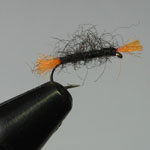
Shipman's Buzzer
Dave Shipman designed this fly to imitate a buzzer in the final stages of hatching.
This fly is an excellent choice when chironomids (midges) are coming off the water.
Fish it ginked up and static on a long degreased leader but make sure you keep in touch with your line.
Fish this fly when you see trout browsing on the surface of the water, showing their dorsal or tail fins
and sipping in the surface film.
|
|
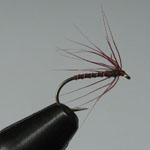
Claret Spider
A good general purpose fly for Knottallow. Spiders originated in the Northern Counties over a century ago and
can be misleading to some as these patterns do not represent spiders, rather hatching insects caught in the surface film.
Many people use spiders on rivers but their use is not restricted running water, many patterns are extremely effective on stillwaters
where they imitate a small, drowned or crippled insect. Spiders can be fished in the same way as a Shipman's buzzer.
|
|
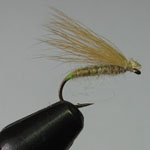
Elk Hair Caddis
This pattern is an imitation of an adult caddisfly and is good for evening fishing on Knottallow. Fish this fly on the surface, or
so it sits in the surface film. This fly can be cast out then retrieved in short pulls to represent the insect strugging free from its
pupal shuck.
|
|
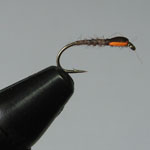
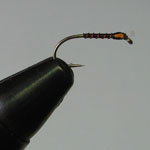
Black Thread Buzzer
This buzzer pattern is a representation of the pupa of a midge or chironomid - in other words a non-biting "mosquito" in the state between a larva
and the winged adult. One thing that characterizes the buzzer patterns is their sparseness as they are imitating an insect pupa which is
small and slender. The primary way of fishing buzzers is by dead drifting, casting out and allowing the wind form an arc in the line and letting
the buzzer drift round on the breeze. Sometimes when fishing on Knottallow, surface drift will help move the fly in a natural manner - in these cases a
slow figure-of-eight-retrieve may help.
|
|
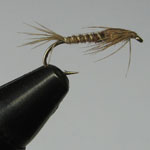
Fawn Buzzer Pupa
Fish this buzzer in the same way as the Black Thread Buzzer (above). Remember to leave your rod tip a couple of feet above the water and
use the slack line at the tip to see when takes occur
|
|
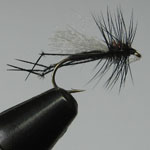
Fraser Nymph
A Good general purpose fly for Knottallow. Very useful in olive hatches. Fish a Fraser Nymph on a floating line just below the surface.
One tied with an olive crystal rib makes a nice alternative.
|
|
Hawthorn Fly
One of the first terrestrials to appear and cause a worthwhile rise on sunny spring days. During the early part of a Hawthorn fall,
look to the lee of sheltered bank for rising fish. Using a single fly aim to land the fly close to the rings of a rise. In any
appreciable wind many naturals get blown to the windward shore where Trout will congregate to pick off the drowned flies. In such
circumstances it can be worth presenting your fly just beneath the surface using a steady figure-of-eight retrieve.
|
|
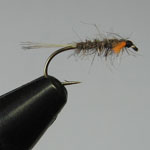
Tufted Hares Ear Nymph
A general all purpose fly, good when olives and buzzers are present though comes into its own during blanket hatches of fly when the
fluorescing tufts make your imitation stand out amongst the many naturals. Fish on a floating line and long leader.
|